
Articles
Short, honest reads that put the cross back at the center of the verse.
Every Verse Through the Finished Work
What Did the Text Actually Say?
Each article takes a verse or idea you’ve probably heard misused, and reads it through the New Covenant. No shame. No striving. Just what the text actually says when the cross stays at the center.
Loading the latest…
Could Jesus Run Out of Power?
You’ve heard it from a stage: even Jesus couldn’t do miracles where there was unbelief, so check your faith and your honor. But that implies the Son of God can be powered down, and the Nazareth scene says the opposite of the slogan built on it.
The Altar Was Already Used
You’ve walked the aisle before, maybe more than once, and still wondered whether it took. But the word we casually use for the front of the church carries a history most of us never trace. Follow it back, and the thing you keep walking toward turns out to be finished already.
Saved Is Bigger Than That
Someone told you the Greek word for “salvation” includes healing and prosperity, so if you’re still sick or still struggling, your faith must be the problem. The word really does carry more than you were told. But the argument hides a mistake, and seeing it hands back something it quietly stole.
Written on Stone
You were handed the Ten Commandments as the measuring stick, and you’ve been quietly keeping score ever since. But Paul says you’re “not under law.” Seeing what the commandments actually were, and where they went, changes everything about how you stand before God.
He Already Forgot
You said sorry last night. You meant it. So why are you saying it again this morning? The confession loop feels like reverence, but Hebrews 8:12 reveals it as something else. God didn’t offer to forgive your sin. He swore to forget it.
Forgiven Because You Forgave?
You forgave them, or you tried to, and underneath sits a quieter fear: if you can’t fully forgive, has God fully forgiven you? Luke 6:38 seems to say your forgiveness is measured by your own. But where Jesus was standing when He said it changes everything.
The Tithe and the Better Priest
You give faithfully, but somewhere underneath it runs a quiet math: was it enough, am I current with God? Hebrews 7 is the verse most often used to keep that obligation in place. Read in context, the chapter does the opposite of what the argument needs it to do.
Saved By the Water?
You believe Jesus died for you, but someone told you that you weren’t really saved until you went under the water. So now there’s a small crack in your confidence. Does baptism actually save you? The answer is freer than the question.

Have You Gone Too Far?
You did it again, and now Hebrews 6 feels like a verdict already handed down. But the warning about falling away was never aimed at the believer who stumbled, and seeing who it was actually written to changes everything.

The Accent of Grace
You’ve been a Christian for years and you still feel like you keep relaying the same foundation. Hebrews 5:12-14 names what you’re feeling, but it isn’t what most readers think it is. Maturity, it turns out, isn’t about behavior at all.

The Last Piece of Wood
You’ve tried to fix the problem yourself. You’ve tried to outwork it, outpray it, outperform it. But what if the solution was never yours to manufacture? Three times in Scripture, God threw wood at an impossible situation — and every time, the nature of the thing changed.
I Can Do All Things Through Christ
It's been on coffee mugs and locker rooms so long it sounds like a blank check for whatever you set your mind to. But Paul wrote it from a prison cell, in the middle of a thank-you note about contentment. Read in context, the verse promises something steadier than success.
Sold Under Sin
Romans 7 is one of the most quoted chapters when Christians talk about struggling with sin. But Paul wasn’t describing the normal Christian life. He was showing why the old system had to be left behind.
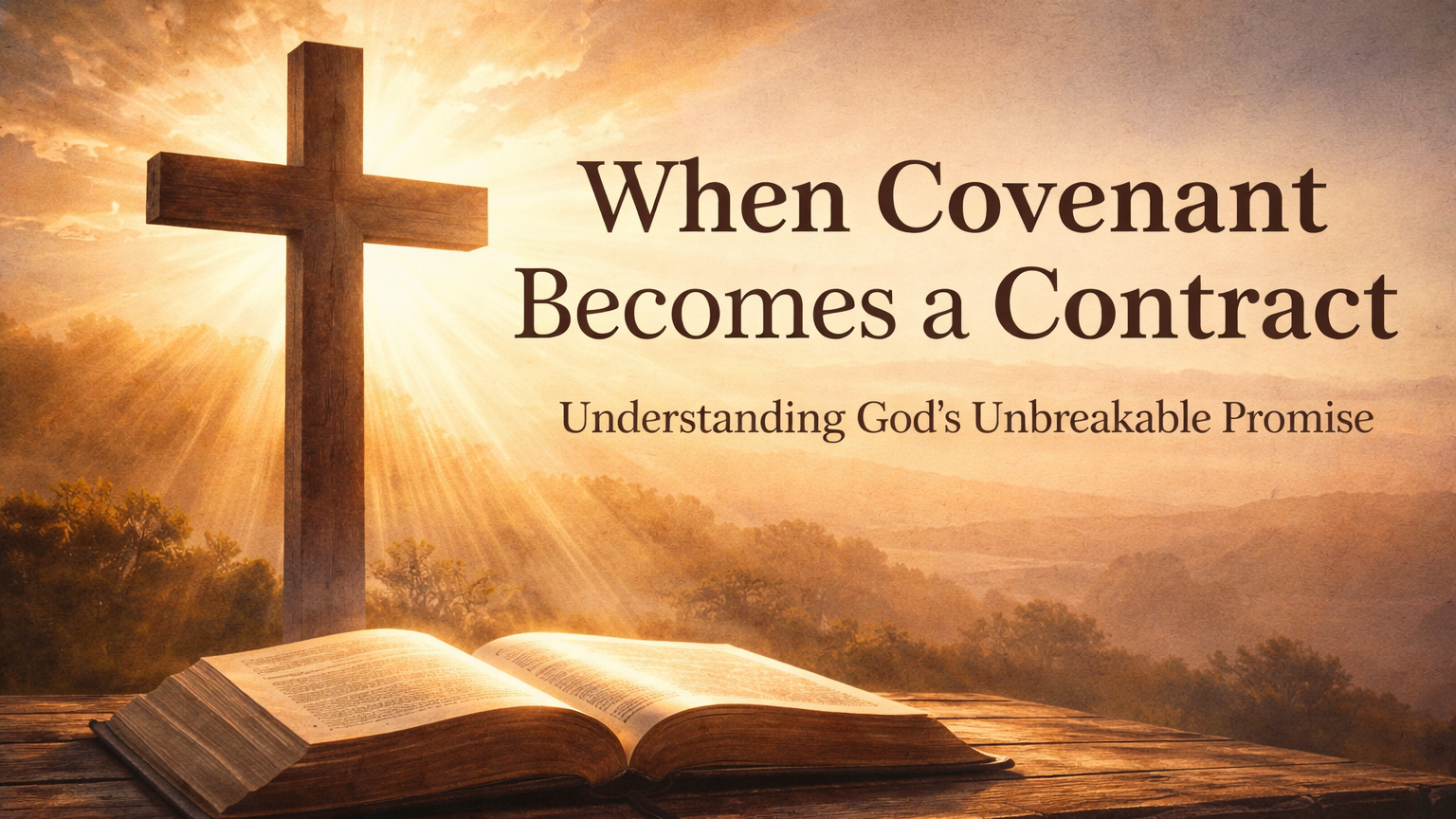
When Covenant Becomes a Contract
What happens when covenant language quietly drifts into contract thinking? This article explores how even good preaching can unintentionally place pressure on the conscience — and why the New Covenant rests entirely on Christ’s finished work, not our performance.
“The Prayer of a Righteous Person”
James ends his letter not with commands, but with confidence. In James 5:13–20, prayer is not presented as a technique for results, but as the natural expression of settled trust. Prayer reveals where reliance has come to rest.
“Friendship With the World”
“Friendship with the world” is not a call to withdraw from culture but a warning about divided trust. In James 4:1–10, James exposes how misplaced desire and competing systems of security fracture reliance on God.
“The Tongue Is a Fire”
“The tongue is a fire” is not a command to manage speech but a diagnosis of divided trust. In James 3:6–12, James explains that words reveal where reliance has settled long before behavior changes. Speech exposes allegiance.
“Not Many of You Should Become Teachers”
James’ warning about teachers is not about discouraging leadership or threatening judgment. In James 3:1–5, James highlights the weight of influence. Words shape belief, and belief shapes trust. Teaching carries responsibility because people lean where they are directed.
“Faith Without Works Is Dead”
“Faith without works is dead” is not a threat to believers or a contradiction of grace. In James 2:14–26, James distinguishes between intellectual belief and living trust. Works do not earn faith. They reveal whether faith has ever carried weight.
“Be Doers of the Word”
“Be doers of the word” is not a call to try harder or perform better. In James 1:19–27, James exposes the danger of hearing truth without responding to it. Hearing without trust creates the illusion of faith, not transformation.