
Articles
Short, honest reads that put the cross back at the center of the verse.
Every Verse Through the Finished Work
What Did the Text Actually Say?
Each article takes a verse or idea you’ve probably heard misused, and reads it through the New Covenant. No shame. No striving. Just what the text actually says when the cross stays at the center.
Loading the latest…
Psalm 110 Rests on an Oath
The New Testament quotes Psalm 110 more than any other chapter, and Hebrews keeps returning to one line most readers pass over. It's the only verse where God swears, and it decides how your covenant holds.
Lay Aside Every Weight
Hebrews 12:1 is often read as a call to try harder. In context, it is something very different. Flowing directly out of Hebrews 11, the call to “lay aside every weight” is not about effort or improvement, but about endurance - remaining anchored to Christ when faith becomes costly.
Hebrews 11 Was Never About Outcomes
Hebrews 11 is often treated as a showcase of successful faith. But the chapter itself refuses that reading. From beginning to end, “by faith” governs triumph and tragedy alike, revealing that faith was never about outcomes at all.
The Sin That So Easily Ensnares
You keep confessing the same besetting sin, and Hebrews 12:1 feels like the verdict. But the sin it names may not be your habit at all, and the difference changes everything.
Measured by the Blood
You feel close to God on the days you got it right, and far from Him on the days you didn’t. But Hebrews 9:12 says your standing was never measured by your week. It was measured by the worth of the blood that bought it, and that blood doesn’t have good days and bad days.
The Altar Was Already Used
You’ve walked the aisle before, maybe more than once, and still wondered whether it took. But the word we casually use for the front of the church carries a history most of us never trace. Follow it back, and the thing you keep walking toward turns out to be finished already.
He Already Forgot
You said sorry last night. You meant it. So why are you saying it again this morning? The confession loop feels like reverence, but Hebrews 8:12 reveals it as something else. God didn’t offer to forgive your sin. He swore to forget it.
The Tithe and the Better Priest
You give faithfully, but somewhere underneath it runs a quiet math: was it enough, am I current with God? Hebrews 7 is the verse most often used to keep that obligation in place. Read in context, the chapter does the opposite of what the argument needs it to do.

Have You Gone Too Far?
You did it again, and now Hebrews 6 feels like a verdict already handed down. But the warning about falling away was never aimed at the believer who stumbled, and seeing who it was actually written to changes everything.

The Accent of Grace
You’ve been a Christian for years and you still feel like you keep relaying the same foundation. Hebrews 5:12-14 names what you’re feeling, but it isn’t what most readers think it is. Maturity, it turns out, isn’t about behavior at all.
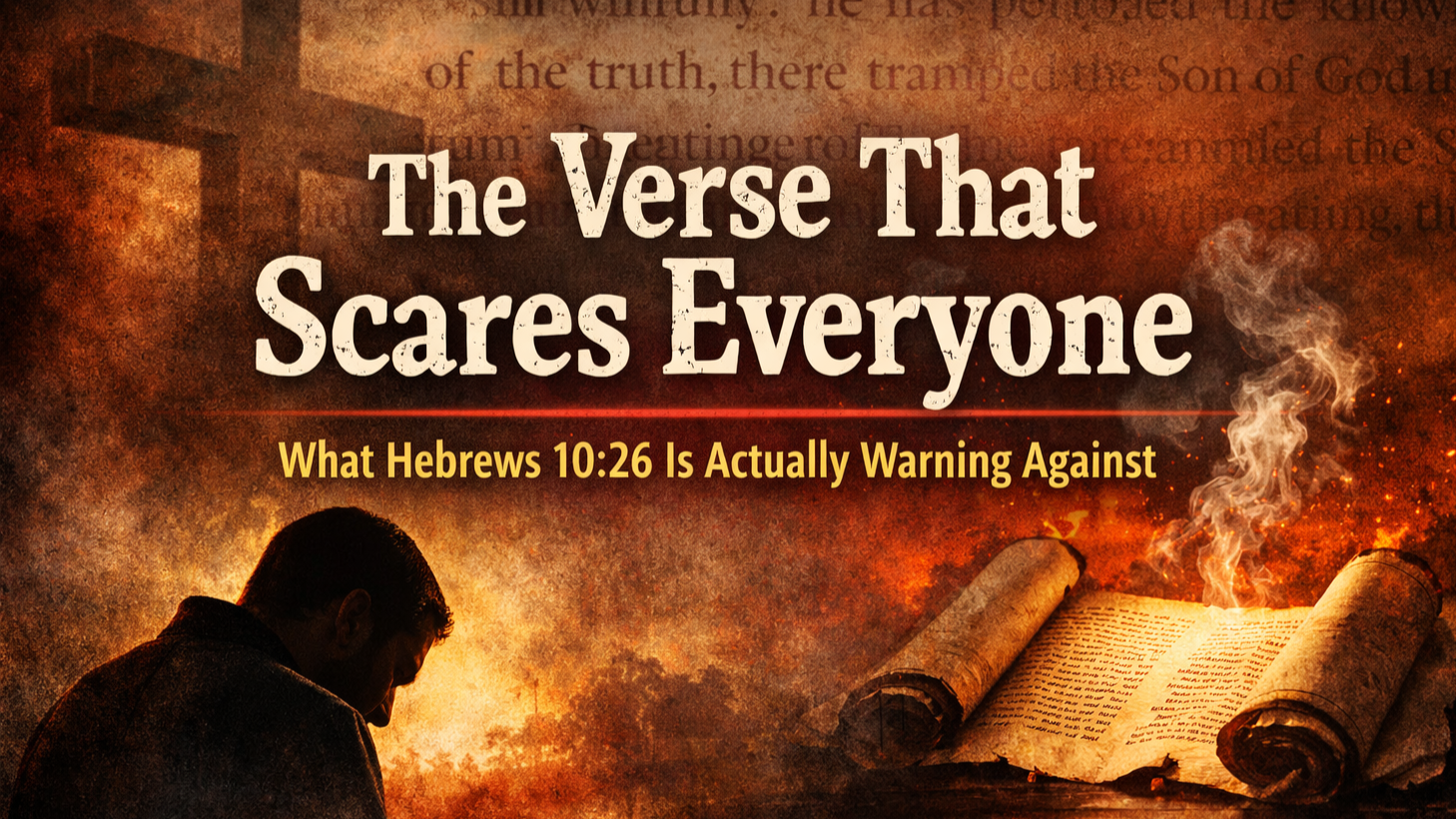
The Verse That Scares Everyone
You knew it was wrong. You did it anyway. And now Hebrews 10:26 feels like a verdict. But the "willful sin" this verse warns against isn't what most people think — and the context changes everything.
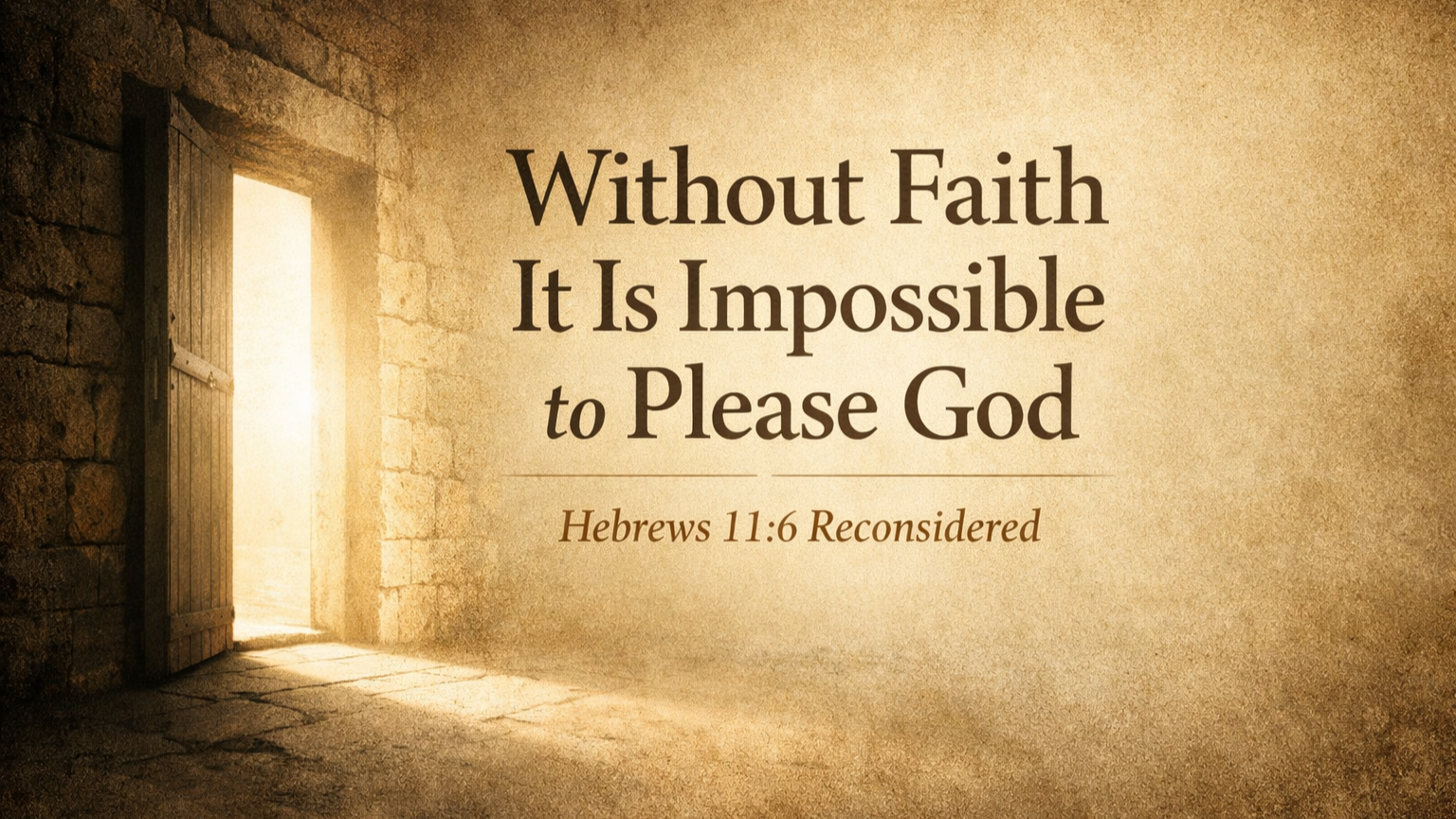
Without Faith It Is Impossible to Please God
Hebrews 11:6 is often used to pressure believers into trying harder to believe. But the verse is not about intensity of faith. It is about location. Outside of faith in Christ, pleasing God was never possible. This verse draws a boundary, not a benchmark.

What the Sabbath Really Means Under the New Covenant
The Sabbath was never meant to be a weekly burden—it was a shadow pointing to something far better. Under the New Covenant, Jesus Himself becomes our rest. This article unpacks the Old Testament symbol, the New Testament fulfillment, and why Hebrews 4 reveals a rest that believers live in every day, not just once a week.